Navigating CRM software pricing can feel like decoding a secret language. With plans ranging from free to thousands per month, understanding what you’re really paying for is crucial. Let’s break down the real cost behind CRM tools and help you make a smart investment.
Understanding CRM Software Pricing Models

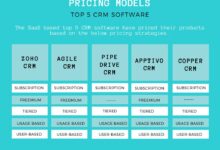
CRM software pricing isn’t one-size-fits-all. Different vendors use different models to charge for their services, and understanding these models is the first step toward making a cost-effective decision. Whether you’re a startup or a large enterprise, knowing how pricing works helps you avoid surprise costs down the line.
Subscription-Based Pricing (Per User, Per Month)
This is the most common CRM software pricing model. You pay a fixed monthly fee for each user who accesses the system. For example, Salesforce starts at $25/user/month, while HubSpot offers a free tier and paid plans from $45/user/month. The cost scales with your team size, making it predictable but potentially expensive as your company grows.
- Best for: Growing businesses with fluctuating team sizes.
- Pros: Predictable billing, easy to scale up or down.
- Cons: Can become costly with large teams; often requires annual contracts.
According to Gartner, subscription models now dominate over 90% of CRM deployments due to their flexibility and low upfront cost.
Flat-Rate Pricing
Some CRM providers offer a single flat fee regardless of the number of users. This model is less common but can be highly cost-effective for teams with many users. For instance, Zoho CRM’s Standard plan at $14/user/month (billed annually) offers unlimited users on higher tiers, which functions similarly to flat-rate pricing.
- Best for: Small to mid-sized teams wanting unlimited access.
- Pros: No per-user cost; great value for large teams.
- Cons: Limited features compared to enterprise-grade CRMs.
“Flat-rate pricing removes the fear of cost creep as your team expands.” — TechRadar CRM Review, 2023
Usage-Based or Tiered Pricing
In this model, pricing depends on how much you use the CRM—such as the number of contacts, emails sent, or automation workflows used. Some platforms like Pipedrive use tiered plans based on functionality, not just users.
- Best for: Sales teams with variable workloads.
- Pros: Pay only for what you use; scalable with activity levels.
- Cons: Harder to predict monthly costs; can spike during high-activity periods.
For deeper insights into usage-based models, check out Forrester’s analysis on SaaS pricing evolution.
Factors That Influence CRM Software Pricing
CRM software pricing isn’t arbitrary. Multiple factors determine how much you’ll pay, from feature sets to deployment methods. Understanding these variables helps you compare apples to apples when evaluating different platforms.
Number of Users and Team Size
Most CRM vendors charge per user, so your team size directly impacts your monthly bill. A team of 5 might pay $125/month on a $25/user plan, while a team of 50 could be looking at $1,250/month for the same CRM. Some vendors offer volume discounts, but these are often negotiable and not advertised.
- Tip: Always ask about bulk pricing or nonprofit discounts.
- Example: Microsoft Dynamics 365 offers significant discounts for enterprise agreements.
Feature Tiers and Plan Levels
CRMs typically offer multiple tiers—Free, Starter, Professional, Enterprise—each unlocking more advanced features. The jump from basic contact management to AI-powered forecasting can double or triple your cost.
- Free Plan: Basic contact & deal tracking (e.g., HubSpot Free CRM).
- Professional Plan: Automation, reporting, integrations (e.g., $50–$80/user/month).
- Enterprise Plan: Customization, API access, advanced security (e.g., $150+/user/month).
As noted by Capterra, over 60% of businesses upgrade within 18 months due to feature limitations in lower tiers.
Deployment Type: Cloud vs. On-Premise
Cloud-based CRMs (SaaS) dominate the market due to lower upfront costs and easier maintenance. However, on-premise solutions, though rare today, still exist for industries with strict data compliance needs (e.g., government, finance).
- Cloud CRM: Monthly subscription, automatic updates, hosted by vendor.
- On-Premise CRM: High upfront license fees, requires internal IT support.
- Cost Difference: On-premise can cost 3–5x more over five years.
“The shift to cloud has democratized CRM access for small businesses.” — Salesforce 2023 State of IT Report
Hidden Costs in CRM Software Pricing
What you see on a vendor’s pricing page is rarely the full picture. Hidden costs can add 20–50% to your total CRM software pricing over time. Being aware of these can save your business thousands.
Implementation and Onboarding Fees
Many enterprise CRMs charge for setup, data migration, and training. Salesforce, for example, may charge $5,000–$25,000 for professional onboarding services. Even mid-tier platforms like Zoho offer free setup only on higher plans.
- DIY Option: Save money but risk poor configuration.
- Professional Services: Ensures proper setup but adds cost.
According to Nucleus Research, companies that invest in proper CRM implementation see 3x higher ROI.
Integration and API Access Charges
Need to connect your CRM with email, marketing tools, or ERP systems? Some vendors charge extra for API access or third-party integrations. For example, HubSpot’s native integrations are free, but custom API calls on lower tiers are limited.
- Common Integrations: Mailchimp, Slack, QuickBooks, Shopify.
- Hidden Cost: $100–$500/month for API overages or middleware tools like Zapier.
Training, Support, and Renewal Fees
While basic support may be included, premium support (24/7, phone, dedicated reps) often costs extra. Training sessions, certification programs, and renewal price hikes are also common.
- Example: Oracle CRM charges $150/hour for advanced support.
- Tactic: Negotiate support levels during contract signing.
“The cheapest CRM isn’t always the most affordable when hidden fees pile up.” — CIO.com, 2023
Top CRM Software Pricing Comparison (2024)
Let’s compare the most popular CRM platforms to see how CRM software pricing stacks up in real-world scenarios. We’ll look at cost, features, and value for different business sizes.
Salesforce: The Enterprise Leader
Salesforce remains the gold standard for enterprise CRM, but it comes at a premium. Its pricing starts at $25/user/month for Essentials and goes up to $300/user/month for Unlimited.
- Essentials: $25/user/month – basic sales automation.
- Professional: $80/user/month – workflow rules, email integration.
- Enterprise: $165/user/month – customization, API access.
- Unlimited: $300/user/month – 24/7 support, sandbox environments.
Learn more at Salesforce Pricing Page.
HubSpot CRM: Best for Startups and SMBs
HubSpot offers a powerful free CRM with unlimited users, making it ideal for small businesses. Paid plans start at $45/month for the Starter tier and go up to $1,200/month for Enterprise.
- Free CRM: Contact & deal tracking, email integration.
- Starter: $45/month – live chat, basic automation.
- Professional: $450/month – marketing hub, reporting.
- Enterprise: $1,200/month – AI content, advanced workflows.
HubSpot’s transparent pricing is praised in PCMag’s 2024 CRM roundup.
Microsoft Dynamics 365: Integrated Powerhouse
Dynamics 365 combines CRM and ERP functionalities, ideal for businesses already in the Microsoft ecosystem. Pricing starts at $65/user/month for Sales Professional and reaches $225/user/month for Enterprise.
- Sales Professional: $65/user/month – lead & opportunity management.
- Sales Enterprise: $150/user/month – AI insights, process automation.
- Customer Service: $95/user/month – service cases, knowledge base.
Explore plans at Microsoft Dynamics Pricing.
Free vs. Paid CRM Software: Is Free Really Free?
Many vendors offer free CRM software, but are they truly free? Let’s dissect the trade-offs between free and paid CRM software pricing models.
What You Get with Free CRM Tools
Free CRMs like HubSpot Free, Zoho CRM Free, and Freshsales Free offer solid core features: contact management, deal tracking, email integration, and basic reporting.
- HubSpot Free: Unlimited users, email tracking, live chat.
- Zoho Free: Up to 3 users, 1 million records, basic automation.
- Freshsales Free: Unlimited users, phone & email support.
These are excellent for startups testing the waters. However, limitations in automation, reporting, and integrations quickly become apparent.
Limitations and Downsides of Free Plans
Free CRMs often restrict advanced features like custom reporting, multi-channel communication, and API access. They may also display vendor branding or limit the number of contacts.
- Contact Limits: Zoho Free caps at 1 million records; HubSpot at 1 million contacts.
- Automation Limits: Free plans often allow only 1–2 automation workflows.
- Support: Usually limited to community forums or email.
“Free CRM is a gateway drug to paid plans.” — SaaS Industry Analyst, 2023
When to Upgrade to a Paid CRM
It’s time to upgrade when you hit any of these signs:
- You’re manually exporting data because reporting is too basic.
- Your team needs automation to save time on repetitive tasks.
- You’re integrating with other tools and hitting API limits.
- Your sales volume exceeds 50 deals/month.
Most businesses upgrade within 12–18 months, according to G2’s 2023 user data.
How to Negotiate CRM Software Pricing
You don’t have to accept the listed price. CRM software pricing is often negotiable, especially for annual contracts or large teams. Here’s how to get the best deal.
Buy Annual, Not Monthly
Most vendors offer 10–20% discounts for annual billing. For example, HubSpot’s Professional plan is $500/month monthly, but $450/month when billed annually—saving $600/year.
- Strategy: Always ask for the annual rate, even if the site shows monthly.
- Bonus: Some vendors throw in free training or onboarding.
Leverage Competitor Quotes
Sales reps are more willing to discount if you show a quote from a competitor. Mentioning a lower price from Zoho or Pipedrive can prompt a Salesforce rep to offer a custom deal.
- Tactic: Use comparison sites like Capterra or G2 to gather quotes.
- Result: Discounts of 15–30% are common with negotiation.
Ask for Added Value, Not Just Discounts
Instead of lowering the price, ask for free onboarding, extra users, or extended support. These add real value without reducing the contract’s perceived worth.
- Example: “Can you include 10 hours of training with the Enterprise plan?”
- Outcome: You get more for the same price, improving ROI.
“The best negotiators don’t ask for lower prices—they ask for more value.” — Harvard Business Review, SaaS Negotiation Guide
Future Trends in CRM Software Pricing
The way we pay for CRM software is evolving. New models are emerging to meet changing business needs, driven by AI, usage analytics, and customer demand for flexibility.
Rise of AI-Powered Features and Their Cost Impact
AI is no longer a luxury—it’s a core CRM feature. Predictive lead scoring, chatbots, and AI-generated emails are now standard in mid-to-high-tier plans. But they come at a cost.
- AI Add-Ons: HubSpot charges extra for AI content tools.
- Future Trend: AI usage may be metered (e.g., $0.01 per AI-generated email).
- Impact: AI could increase CRM software pricing by 15–25% over the next 3 years.
For insights, see McKinsey’s report on AI in sales.
Pay-As-You-Go and Consumption-Based Models
Some vendors are experimenting with pay-per-use pricing. Instead of per-user fees, you pay based on actions—like $0.01 per email sent or $0.10 per automation run.
- Example: AWS-style billing for CRM actions.
- Best for: Seasonal businesses or startups with irregular activity.
- Challenge: Harder to budget; risk of cost spikes.
Consolidation of CRM Suites and Bundled Pricing
Vendors are bundling CRM with marketing, service, and commerce tools. Salesforce’s Customer 360, HubSpot’s Growth Suite, and Microsoft’s Dynamics 365 are examples of all-in-one pricing.
- Benefit: Lower cost than buying tools separately.
- Drawback: You may pay for features you don’t use.
- Trend: Bundled suites could reduce standalone CRM pricing over time.
“The future of CRM isn’t just software—it’s an ecosystem.” — TechCrunch, 2024
How to Choose the Right CRM Based on Pricing and Value
Price alone shouldn’t dictate your CRM choice. You need to evaluate total value—features, scalability, support, and ROI. Here’s how to make a smart decision.
Calculate Total Cost of Ownership (TCO)
TCO includes subscription fees, implementation, training, integrations, and support. A $50/user/month CRM with $10,000 in setup costs may be more expensive than a $70/user/month CRM with free onboarding.
- Formula: (Monthly Fee × 12) + Implementation + Training + Integrations.
- Tool: Use a CRM TCO calculator from Nucleus Research.
Assess Scalability and Long-Term Fit
Will your CRM grow with your business? A cheap plan today might force you to migrate in 18 months, costing time and money. Look for platforms that offer smooth upgrades.
- Red Flag: Vendors that make data export difficult.
- Green Flag: Transparent upgrade paths and API access.
Measure ROI: Is Your CRM Worth the Price?
Ultimately, CRM software pricing should be justified by ROI. Track metrics like:
- Sales cycle length reduction.
- Lead conversion rate improvement.
- Customer retention increase.
- Time saved on admin tasks.
Studies show businesses see an average ROI of $8.70 for every $1 spent on CRM, according to Nucleus Research.
What is the average cost of CRM software?
The average CRM software pricing ranges from free (for basic plans) to $300/user/month for enterprise solutions. Most small to mid-sized businesses pay between $12 to $80 per user per month, depending on features and vendor.
Is there a truly free CRM with no hidden costs?
Yes, platforms like HubSpot CRM and Zoho CRM offer genuinely free plans with no time limits. However, they limit advanced features and may encourage upgrades through feature restrictions, not hidden fees.
Can CRM pricing be negotiated?
Absolutely. Most vendors are open to negotiation, especially for annual contracts or large teams. You can often secure discounts, free onboarding, or extra users by simply asking.
What are the most common hidden costs in CRM software pricing?
Common hidden costs include implementation fees, data migration, API access overages, premium support, and training. Always request a full cost breakdown before signing.
Which CRM offers the best value for small businesses?
HubSpot CRM and Zoho CRM are widely regarded as the best value for small businesses due to their free tiers, user-friendly interfaces, and scalable paid plans.
Choosing the right CRM isn’t just about finding the lowest price—it’s about understanding the full picture of CRM software pricing. From subscription models to hidden fees, negotiation tactics to future trends, being informed empowers you to make a decision that delivers real value. Whether you’re a solopreneur or a growing enterprise, the right CRM should enhance productivity, improve customer relationships, and ultimately drive revenue. Take the time to evaluate not just the sticker price, but the total cost, scalability, and ROI. With the insights from this guide, you’re now equipped to navigate the complex world of CRM software pricing with confidence and clarity.
Further Reading:
