In today’s fast-paced digital world, businesses are turning to smarter tools to stay ahead. A CRM with chatbot integration isn’t just a trend—it’s a game-changer, revolutionizing how companies engage customers and streamline operations.
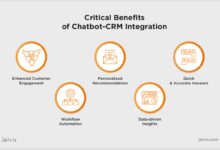
What Is a CRM with Chatbot?

A CRM with chatbot combines the data-driven power of Customer Relationship Management (CRM) systems with the real-time responsiveness of AI-powered chatbots. This fusion allows businesses to automate customer interactions while maintaining personalized, data-rich communication. Instead of choosing between human touch and automation, companies now get the best of both worlds.
The Evolution of CRM Systems
Traditional CRM platforms like Salesforce, HubSpot, and Zoho were built to store customer data, track interactions, and manage sales pipelines. While effective, these systems often required manual input and delayed responses. As customer expectations evolved, so did the need for instant, intelligent engagement. Enter chatbots—AI tools capable of handling inquiries 24/7 without human intervention.
The integration of chatbots into CRM systems marks a pivotal shift. According to Gartner, by 2025, over 80% of customer service interactions will be handled without human agents. This shift is largely driven by advancements in natural language processing (NLP) and machine learning, making chatbots smarter and more context-aware than ever.
How Chatbots Enhance CRM Functionality
When a chatbot is embedded within a CRM, it gains access to a wealth of customer data—purchase history, support tickets, preferences, and more. This allows the bot to deliver hyper-personalized responses. For example, if a customer asks about their order status, the chatbot can pull real-time data from the CRM and provide an accurate update without transferring the user to a live agent.
Moreover, chatbots can proactively initiate conversations based on CRM triggers. If a high-value customer hasn’t logged in for 30 days, the CRM can prompt the chatbot to send a personalized message: “We miss you! Here’s a special offer just for you.” This level of automation not only improves retention but also strengthens customer relationships.
“Integrating chatbots into CRM isn’t about replacing humans—it’s about empowering them with better tools and insights.” — Forbes Insights, 2023
7 Key Benefits of Using a CRM with Chatbot
The synergy between CRM and chatbot technology delivers measurable advantages across sales, marketing, and customer service. Let’s explore the seven most impactful benefits that make a CRM with chatbot a must-have for modern businesses.
1. 24/7 Customer Support Without Extra Costs
One of the most compelling reasons to adopt a CRM with chatbot is round-the-clock availability. Unlike human agents who need breaks and work shifts, chatbots never sleep. They can handle inquiries at 3 a.m. just as efficiently as at 3 p.m.
This constant availability is especially valuable for global businesses serving customers across multiple time zones. A study by IBM found that chatbots can reduce customer service costs by up to 30%. When integrated with CRM, these savings multiply because the bot uses existing customer data to resolve issues faster.
- Reduces dependency on after-hours staffing
- Handles common queries like order tracking, returns, and FAQs
- Escalates complex issues to human agents with full context from CRM
2. Faster Response Times and Improved Customer Satisfaction
Speed matters. Research from SuperOffice shows that the average response time for customer service emails is 12 hours—but customers expect a reply within 10 minutes. A CRM with chatbot closes this gap instantly.
Chatbots can acknowledge inquiries in seconds, provide immediate answers, and even initiate workflows like refund requests or appointment bookings. Because they’re connected to the CRM, they don’t start from scratch—they know the customer’s history and preferences.
For example, if a loyal customer contacts support, the chatbot can greet them by name and reference their last purchase: “Hi Sarah, I see you bought the premium plan last week. How can I help?” This level of personalization boosts satisfaction and trust.
3. Seamless Data Collection and CRM Enrichment
Every conversation with a chatbot is an opportunity to gather valuable data. From contact details to product preferences, chatbots can collect information during interactions and automatically update CRM records.
Imagine a visitor landing on your website and engaging with a chatbot. The bot asks qualifying questions: “What brings you here today?” or “Are you looking for a personal or business solution?” Based on the responses, it tags the lead in the CRM, assigns a score, and routes it to the right sales representative.
This real-time data enrichment eliminates manual entry errors and ensures your CRM is always up to date. According to Salesforce, sales teams using automated data capture close deals 29% faster than those relying on manual input.
“A CRM with chatbot turns every customer interaction into a data point that fuels smarter decisions.”
How a CRM with Chatbot Transforms Sales Processes
Sales teams are under constant pressure to generate leads, nurture prospects, and close deals faster. A CRM with chatbot acts as a force multiplier, automating repetitive tasks and providing real-time insights that accelerate the sales cycle.
Automated Lead Qualification and Routing
One of the biggest challenges in sales is identifying which leads are ready to buy. A chatbot integrated with CRM can conduct initial qualification by asking targeted questions during live chats or website interactions.
For instance, a chatbot might ask: “Are you looking to implement this solution within the next 30 days?” or “What’s your monthly budget for this service?” Based on the answers, it assigns a lead score and routes high-potential prospects to sales reps via CRM alerts.
This ensures that sales teams focus their energy on qualified leads, reducing wasted time and increasing conversion rates. Companies like Drift have reported that chatbot-qualified leads convert at 3-5x higher rates than traditional forms.
Personalized Product Recommendations
By accessing CRM data, chatbots can recommend products or services based on a customer’s past behavior. If a user previously purchased a fitness tracker, the chatbot might suggest compatible accessories or a premium subscription plan.
These recommendations aren’t random—they’re driven by purchase history, browsing behavior, and demographic data stored in the CRM. This level of personalization increases average order value and enhances the customer experience.
For example, Sephora’s chatbot on Facebook Messenger uses CRM data to offer personalized beauty advice and product suggestions, resulting in an 11% higher conversion rate compared to standard campaigns.
Real-Time Sales Assistance and Upselling
Chatbots can also assist during live sales calls or demos by pulling up customer profiles, past interactions, and contract details. This enables sales reps to deliver more informed and persuasive pitches.
Additionally, chatbots can trigger upsell opportunities. If a customer is on a basic plan, the bot might say: “Many users like you upgrade to the Pro plan for advanced analytics. Would you like to see a comparison?” This subtle nudge, backed by CRM insights, can significantly boost revenue.
Enhancing Marketing Campaigns with CRM and Chatbot Integration
Marketing teams can leverage a CRM with chatbot to create more targeted, interactive, and measurable campaigns. Instead of one-way broadcasts, chatbots enable two-way conversations that drive engagement and conversions.
Interactive Lead Nurturing Campaigns
Email marketing is effective, but engagement rates are declining. Chatbots offer a more dynamic alternative. Marketers can design chatbot sequences that guide users through a journey—answering questions, sharing content, and collecting feedback.
For example, after a user downloads an ebook, the chatbot can follow up: “Did you find Chapter 3 helpful? Would you like a case study on this topic?” These interactions keep the brand top-of-mind and nurture leads more effectively than static emails.
Because the chatbot is linked to the CRM, every interaction is logged, allowing marketers to segment audiences based on engagement levels and tailor future campaigns accordingly.
Behavior-Triggered Messaging
CRM systems track user behavior—pages visited, content downloaded, cart abandonment. When combined with a chatbot, this data can trigger timely, context-aware messages.
If a user adds a product to their cart but doesn’t check out, the chatbot can instantly intervene: “Need help completing your purchase? Here’s 10% off as a thank you for shopping with us.” This real-time intervention can recover up to 15% of abandoned carts, according to Barilliance.
These behavior-triggered messages feel less intrusive than pop-ups because they’re conversational and helpful, not pushy.
Feedback Collection and Market Research
Understanding customer sentiment is crucial for refining marketing strategies. A CRM with chatbot can conduct post-purchase surveys, event follow-ups, or product feedback requests in a conversational format.
Instead of sending a lengthy survey, the chatbot asks one question at a time: “On a scale of 1 to 5, how satisfied were you with your recent purchase?” Followed by: “What could we improve?” This conversational approach increases response rates and provides richer qualitative data.
All feedback is automatically stored in the CRM, tagged to the customer profile, and available for analysis. This creates a continuous feedback loop that informs product development and marketing messaging.
Top CRM Platforms with Built-In Chatbot Capabilities
Not all CRM systems are created equal when it comes to chatbot integration. Some offer native chatbot builders, while others rely on third-party tools. Here are the leading CRM platforms that support seamless chatbot integration.
Salesforce Einstein Bots
Salesforce, the world’s leading CRM, offers Einstein Bots—a no-code chatbot builder that integrates directly with Sales Cloud, Service Cloud, and Marketing Cloud. Einstein Bots use AI to understand customer intent and pull data from CRM records to deliver personalized responses.
Key features include:
- Drag-and-drop bot builder
- Pre-built templates for common use cases
- Seamless handoff to human agents
- Real-time analytics and performance tracking
With Einstein Bots, companies can deploy chatbots across websites, messaging apps, and even voice channels—all while maintaining full visibility in the CRM.
HubSpot’s Conversational Tools
HubSpot combines CRM, marketing, sales, and service tools in one platform. Its chatbot builder allows users to create bots for lead capture, customer support, and appointment scheduling.
What sets HubSpot apart is its ease of use. Marketers and sales teams can build bots without coding, using simple logic flows. Every interaction is automatically logged in the CRM, enriching contact records with behavioral data.
HubSpot also integrates with Facebook Messenger, WhatsApp, and Instagram, enabling businesses to meet customers on their preferred channels.
Zoho CRM + Zobot
Zoho offers a cost-effective CRM solution with Zobot, its AI-powered chatbot platform. Zobot integrates natively with Zoho CRM, allowing bots to access customer data, update records, and trigger workflows.
Zobot supports multi-language conversations and can be deployed on websites, mobile apps, and social media. It also integrates with Zoho’s other tools like Desk (support) and Campaigns (marketing), creating a unified ecosystem.
“Zoho’s integrated approach makes it ideal for small to mid-sized businesses looking for an all-in-one solution.” — TechRadar Review, 2023
How to Implement a CRM with Chatbot: A Step-by-Step Guide
Implementing a CRM with chatbot doesn’t have to be complex. Follow this step-by-step guide to ensure a smooth rollout and maximum ROI.
1. Define Your Objectives
Start by identifying your goals. Are you looking to improve customer support response times? Generate more qualified leads? Reduce operational costs? Your objectives will shape the chatbot’s design and functionality.
For example, if your goal is lead generation, your chatbot should focus on qualifying visitors and capturing contact information. If it’s customer service, the bot should handle FAQs, track orders, and escalate issues.
2. Choose the Right CRM and Chatbot Platform
Not all platforms are suited for every business. Consider factors like:
- Integration capabilities with your existing tech stack
- Ease of use for non-technical teams
- Scalability and pricing
- Support for AI and NLP features
If you’re already using Salesforce, Einstein Bots might be the best fit. For startups and SMBs, HubSpot or Zoho offer affordable, user-friendly options.
3. Design Conversational Flows
Map out the key conversations your chatbot will handle. Use flowcharts to visualize user journeys—starting from greeting, through questioning, to resolution or handoff.
Keep the tone conversational and aligned with your brand voice. Avoid overly robotic language. Test different phrasings to see what feels most natural.
For example:
- Bot: “Hi! I’m Alex, your virtual assistant. How can I help today?”
- User: “I need help with my order.”
- Bot: “Sure! Could you please share your order number?”
Ensure the bot can gracefully handle misunderstandings by asking clarifying questions or offering a menu of options.
4. Integrate with CRM and Test Thoroughly
Connect your chatbot to your CRM using APIs or native integrations. Test every flow to ensure data is captured correctly and actions are triggered as expected.
Run simulations with real customer scenarios. Check that:
- Contact details are saved in the CRM
- Lead scores are updated
- Support tickets are created when needed
Fix any gaps before going live.
5. Launch, Monitor, and Optimize
Start with a soft launch to a small audience. Monitor performance using metrics like:
- Conversation completion rate
- Customer satisfaction (CSAT)
- Number of human handoffs
- Lead conversion rate
Use this data to refine the bot’s responses, improve accuracy, and expand its capabilities over time.
Common Challenges and How to Overcome Them
While a CRM with chatbot offers immense benefits, implementation isn’t without challenges. Here are the most common hurdles and how to address them.
1. Ensuring Data Privacy and Security
Chatbots handle sensitive customer information, making data security a top concern. To mitigate risks:
- Use encrypted connections (HTTPS) for all chatbot interactions
- Comply with GDPR, CCPA, and other privacy regulations
- Limit data access to only what’s necessary for the bot’s function
- Regularly audit logs and permissions
Choose CRM platforms with strong security certifications and built-in compliance tools.
2. Managing Customer Expectations
Some customers may expect human-level understanding from chatbots. When the bot fails to understand a complex query, frustration can ensue.
To manage expectations:
- Be transparent: Let users know they’re chatting with a bot
- Offer easy escalation to human agents
- Use fallback responses: “I’m still learning. Let me connect you with a colleague who can help.”
Over time, as the bot learns from interactions, its accuracy will improve.
3. Avoiding Over-Automation
While automation is powerful, not every interaction should be handled by a bot. Over-automating can make your brand feel impersonal.
Strike a balance by reserving bots for routine tasks and keeping human agents available for high-stakes or emotional conversations—like complaints or complex negotiations.
“The goal isn’t to replace humans, but to free them from repetitive work so they can focus on what they do best: building relationships.”
Future Trends in CRM with Chatbot Technology
The integration of CRM and chatbot is evolving rapidly. Emerging technologies are pushing the boundaries of what’s possible, creating smarter, more intuitive customer experiences.
AI-Powered Predictive Engagement
Future CRM with chatbot systems will use predictive analytics to anticipate customer needs before they arise. By analyzing past behavior, purchase cycles, and engagement patterns, AI will trigger proactive conversations.
For example, if a customer typically renews their subscription every six months, the chatbot might reach out a week before expiration: “Your plan is ending soon. Would you like to renew with a 10% loyalty discount?”
This shift from reactive to predictive engagement will redefine customer retention strategies.
Voice-Activated CRM Assistants
With the rise of voice search and smart speakers, voice-enabled chatbots are gaining traction. Imagine a sales rep asking, “Hey CRM, what’s the status of deal #1234?” and getting a spoken update from the system.
Platforms like Amazon Alexa for Business and Google Assistant are already enabling voice interactions with CRM data. As voice recognition improves, this will become a standard feature in CRM with chatbot ecosystems.
Emotion Detection and Sentiment Analysis
Next-generation chatbots will go beyond text to detect customer emotions through tone, word choice, and response speed. If a user seems frustrated, the bot can adjust its tone or escalate to a human agent immediately.
CRM systems will store this emotional data, allowing businesses to identify pain points and improve service quality. Companies like Affectiva and IBM Watson are already pioneering emotion AI in customer service.
What is a CRM with chatbot?
A CRM with chatbot is a system that integrates customer relationship management software with AI-powered chatbots to automate interactions, personalize communication, and enrich customer data in real time.
How does a chatbot integrate with CRM?
Chatbots integrate with CRM through APIs or native connectors, allowing them to access customer data, update records, trigger workflows, and log interactions directly within the CRM platform.
Can chatbots replace human customer service agents?
No, chatbots are designed to handle routine inquiries and free up human agents for complex or emotionally sensitive issues. The best results come from a hybrid model where bots and humans work together.
Which CRM has the best chatbot integration?
Salesforce Einstein Bots, HubSpot Conversations, and Zoho Zobot are among the top CRM platforms with robust chatbot capabilities, each offering unique strengths depending on business size and needs.
Is a CRM with chatbot suitable for small businesses?
Absolutely. Many CRM platforms offer affordable, scalable chatbot solutions ideal for small businesses looking to improve efficiency and customer experience without a large team.
Integrating a CRM with chatbot is no longer a luxury—it’s a strategic necessity. From automating customer support to enriching sales pipelines and powering intelligent marketing, this technology delivers tangible ROI across departments. By following best practices in implementation and staying ahead of emerging trends, businesses can build deeper relationships, operate more efficiently, and deliver exceptional customer experiences. The future of customer engagement is conversational, data-driven, and always on.
Further Reading:
