Looking for a powerful yet affordable way to manage customer relationships? A Low Cost CRM might be exactly what your business needs to grow smarter without breaking the bank.
What Is a Low Cost CRM and Why It Matters

In today’s competitive business landscape, managing customer interactions efficiently is no longer a luxury—it’s a necessity. For small businesses, startups, and solopreneurs, investing in expensive enterprise software isn’t feasible. That’s where a Low Cost CRM comes into play. These tools offer essential customer relationship management features at a fraction of the price, enabling even the smallest teams to organize leads, track sales, and improve customer service.
Defining Low Cost CRM
A Low Cost CRM refers to any customer relationship management system that delivers core functionalities—like contact management, sales tracking, and communication logs—at a minimal monthly or annual cost. Often priced under $20 per user per month (or even free for basic use), these platforms are designed to be accessible without sacrificing usability.
Unlike enterprise-level CRMs such as Salesforce or Microsoft Dynamics, which can cost hundreds per user monthly, Low Cost CRM solutions focus on simplicity, ease of setup, and essential features. They are ideal for businesses with limited budgets but high ambitions.
Key Features of Affordable CRM Systems
While pricing varies, most Low Cost CRM platforms include a standard set of features that empower small teams to stay organized and responsive. These typically include:
- Contact and lead management
- Task and activity tracking
- Email integration and automation
- Basic reporting and dashboards
- Mobile accessibility
- Integration with common tools like Gmail, Outlook, or Slack
Some platforms even offer advanced features like workflow automation, pipeline management, and customer support ticketing—all without a hefty price tag.
“A CRM isn’t just for big companies. Even a solo entrepreneur can benefit from tracking every customer interaction.” — Neil Patel, Marketing Expert
Top 7 Low Cost CRM Solutions in 2024
With dozens of CRM platforms on the market, choosing the right one can be overwhelming. To help you make an informed decision, we’ve researched and tested the top seven Low Cost CRM options that deliver maximum value for minimal investment.
1. HubSpot CRM (Free Tier)
HubSpot CRM is arguably the most popular free CRM on the market. Its free version includes contact management, deal tracking, email scheduling, meeting booking, and live chat. It integrates seamlessly with HubSpot’s marketing, sales, and service hubs, making it a scalable choice as your business grows.
One of the standout features is its intuitive interface and powerful automation tools, even in the free tier. You can track email opens, set reminders, and log calls directly from your inbox. For businesses that plan to scale, HubSpot offers affordable paid tiers starting at $15/month.
Learn more about HubSpot CRM at HubSpot’s official site.
2. Zoho CRM (Free for Up to 3 Users)
Zoho CRM is a robust platform that offers a free plan for up to three users. It includes lead and contact management, sales forecasting, workflow automation, and AI-powered assistant (Zia). The interface is clean, and customization options are impressive for a free tool.
Paid plans start at $14/user/month and include advanced features like territory management, web forms, and multi-channel communication. Zoho also integrates with over 40 Zoho applications and hundreds of third-party tools via Zapier.
Explore Zoho CRM at Zoho’s CRM page.
3. Bitrix24 (Free for Unlimited Users)
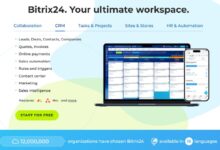
Bitrix24 stands out by offering a free plan with unlimited users—perfect for growing teams. While the free version has limited cloud storage (5 GB), it includes CRM, task management, document sharing, telephony, and even a built-in intranet.
The CRM module supports sales automation, lead pipelines, and customer communication tracking. It also offers a visual workflow builder, making it easy to automate follow-ups and task assignments without coding.
For businesses needing more storage or advanced features, paid plans start at $49/month for the entire company (not per user), making it one of the most cost-effective Low Cost CRM options available.
Visit Bitrix24’s website to learn more.
4. Agile CRM (Free for 10 Users)
Agile CRM combines CRM, marketing automation, and helpdesk functionalities in one platform. Its free plan supports up to 10 users and includes contact management, email campaigns, web tracking, and basic reporting.
What makes Agile CRM unique is its built-in telephony and appointment scheduling. You can make calls directly from the CRM, track call durations, and log interactions automatically. It also offers a mobile app with full functionality.
Paid plans start at $9.99/user/month, making it one of the most affordable full-featured CRMs on the market.
5. Insightly (Free for 2 Users)
Insightly is ideal for small businesses that need project and CRM integration. Its free plan supports two users and includes contact management, opportunity tracking, and task management.
The platform excels in visualizing customer journeys and project timelines. It also offers workflow automation and email integration. For businesses managing client projects, Insightly’s project-CRM hybrid model is a game-changer.
Paid plans start at $29/user/month, which is higher than others, but the depth of features justifies the cost for teams needing robust project tracking.
6. Freshsales (Free for Unlimited Users)
Freshsales, part of the Freshworks suite, offers a free CRM for unlimited users. It includes AI-based lead scoring, email tracking, phone integration, and a visual deal pipeline.
The platform is known for its clean design and ease of use. Its AI assistant, Freddy, helps prioritize leads and suggests next steps. The free version also includes 1,000 email credits and 100 voice minutes per month.
Paid plans start at $15/user/month and include advanced automation, custom modules, and reporting. It’s a great choice for sales-driven teams looking for smart insights without complexity.
Check out Freshsales at Freshworks CRM.
7. Capsule CRM (Free for 2 Users)
Capsule CRM is a simple, no-frills CRM that focuses on contact and sales pipeline management. Its free plan supports two users and includes task tracking, calendar sync, and integration with Gmail and Outlook.
While it lacks advanced automation, Capsule excels in usability and reliability. It integrates with Xero, Mailchimp, and Zapier, making it ideal for small service-based businesses like consultants, freelancers, and agencies.
Paid plans start at $18/user/month and include activity tracking, reporting, and support for more users.
How to Choose the Right Low Cost CRM for Your Business
Selecting the best Low Cost CRM isn’t just about price—it’s about fit. The right CRM should align with your business goals, team size, and workflow. Here’s a step-by-step guide to help you make the right choice.
Assess Your Business Needs
Start by identifying what you need from a CRM. Ask yourself:
- Do you need contact management, or full sales pipeline tracking?
- Is marketing automation important for your campaigns?
- Do you require integration with accounting or email tools?
- Will your team access the CRM on mobile devices?
Answering these questions will help narrow down platforms that offer the features you actually use.
Consider Scalability and Integration
A great Low Cost CRM should grow with your business. Look for platforms that offer tiered pricing and seamless integration with tools you already use—like Google Workspace, Microsoft 365, Slack, or Zoom.
Integration reduces manual data entry and improves efficiency. For example, if you use Mailchimp for email marketing, a CRM that syncs with it can automatically update contact statuses based on campaign engagement.
Platforms like Zoho and HubSpot offer extensive integration ecosystems, making them future-proof choices.
Test Before You Commit
Most Low Cost CRM providers offer free trials or free tiers. Take advantage of these to test usability, speed, and feature availability. Involve your team in the testing process—after all, they’ll be using it daily.
During the trial, try importing real data, creating workflows, and sending test emails. Pay attention to how intuitive the interface is and whether support documentation is helpful.
“The best CRM is the one your team will actually use.” — Sales Manager, Tech Startup
Benefits of Using a Low Cost CRM
Adopting a Low Cost CRM can transform how your business operates. Beyond just organizing contacts, these tools offer strategic advantages that drive growth and efficiency.
Improved Customer Relationships
A CRM centralizes all customer interactions—emails, calls, meetings, and notes—in one place. This means no more digging through inboxes or sticky notes to remember what a client said last week.
With a complete history at your fingertips, you can personalize communication, anticipate needs, and build stronger relationships. This leads to higher customer satisfaction and loyalty.
Increased Sales Efficiency
CRMs help sales teams stay on top of leads and opportunities. Automated reminders, task lists, and pipeline views ensure that no prospect falls through the cracks.
Features like email tracking and open notifications allow reps to follow up at the right moment, increasing conversion rates. According to Nucleus Research, businesses using CRM see an average $8.71 return for every dollar spent.
Enhanced Team Collaboration
Many Low Cost CRM platforms include shared calendars, task assignments, and internal commenting. This fosters transparency and accountability across teams.
For example, a sales rep can assign a follow-up task to a colleague while tagging a manager for approval—all within the CRM. This reduces reliance on external messaging apps and keeps everything in context.
Common Mistakes to Avoid When Implementing a Low Cost CRM
Even the best CRM can fail if implemented poorly. Here are common pitfalls and how to avoid them.
Skipping Proper Data Migration
One of the biggest mistakes is importing messy or outdated data. Before migrating, clean your contact lists, remove duplicates, and standardize formats (e.g., phone numbers, job titles).
Use CSV import templates provided by the CRM and test with a small batch first. Poor data quality leads to inaccurate reports and frustrated users.
Over-Customizing Too Early
While customization is powerful, overdoing it early can complicate adoption. Start with default settings and basic workflows. Once your team is comfortable, gradually introduce custom fields, pipelines, or automation.
Remember: simplicity encourages usage. A complex CRM that no one uses is worse than no CRM at all.
Ignoring User Training
Even the most intuitive CRM requires some training. Allocate time for onboarding sessions, create quick-reference guides, and designate a CRM champion on your team.
Most providers offer free training resources, webinars, and knowledge bases. Use them. A well-trained team is more likely to adopt the system and leverage its full potential.
How to Maximize ROI from Your Low Cost CRM
Getting the most out of your Low Cost CRM requires more than just installation. It’s about consistent usage, optimization, and alignment with business goals.
Automate Repetitive Tasks
Use workflow automation to save time. For example:
- Automatically assign new leads to sales reps based on region or product interest.
- Send follow-up emails after a meeting is scheduled.
- Tag contacts who open your emails three times but don’t reply.
Automation reduces manual work and ensures consistency in customer engagement.
Track Key Metrics Regularly
Most Low Cost CRM platforms offer dashboards and reports. Use them to monitor KPIs like:
- Lead conversion rate
- Average deal size
- Sales cycle length
- Customer retention rate
Regularly reviewing these metrics helps identify bottlenecks and opportunities for improvement.
Integrate with Other Business Tools
Connect your CRM with email, calendar, marketing, and accounting tools. For example:
- Sync Gmail contacts to your CRM automatically.
- Link your CRM to QuickBooks for seamless invoicing.
- Connect to Mailchimp to track campaign performance by lead source.
Integration creates a unified ecosystem, reducing data silos and improving decision-making.
Future Trends in Low Cost CRM Technology
The CRM landscape is evolving rapidly, and even budget-friendly platforms are adopting cutting-edge features. Staying ahead of these trends ensures your Low Cost CRM remains effective in the long term.
AI-Powered Insights and Automation
Artificial intelligence is no longer exclusive to enterprise software. Platforms like Freshsales and Zoho now offer AI-driven lead scoring, email suggestions, and predictive analytics in their free or low-cost plans.
These tools analyze customer behavior to predict which leads are most likely to convert, helping sales teams prioritize efforts and increase win rates.
Mobile-First CRM Design
With remote work and field sales on the rise, mobile accessibility is crucial. Modern Low Cost CRM platforms are designed with mobile-first interfaces, offering full functionality on smartphones and tablets.
Features like offline mode, voice-to-text notes, and GPS-based visit tracking make it easier for teams to stay productive on the go.
Increased Focus on Data Privacy and Security
As data breaches become more common, CRM providers are enhancing security measures. Look for platforms that offer two-factor authentication, data encryption, and GDPR compliance—even in their free tiers.
Choosing a secure CRM protects your business and builds customer trust.
What is a Low Cost CRM?
A Low Cost CRM is a customer relationship management system designed to be affordable for small businesses and startups, typically offering core features like contact management, sales tracking, and email integration at little to no cost.
Is a free CRM reliable for business use?
Yes, many free CRMs like HubSpot, Zoho, and Freshsales are highly reliable and used by thousands of businesses worldwide. They offer robust features and enterprise-grade security, even in their free versions.
Can a Low Cost CRM integrate with other tools?
Absolutely. Most Low Cost CRM platforms integrate with popular tools like Gmail, Outlook, Slack, Mailchimp, QuickBooks, and Zoom via native integrations or third-party services like Zapier.
How do I migrate data to a new CRM?
Most CRMs allow CSV file imports. First, clean your data by removing duplicates and standardizing formats. Then, use the CRM’s import tool and map fields correctly. Test with a small batch before full migration.
Which Low Cost CRM is best for sales teams?
Freshsales and HubSpot CRM are excellent choices for sales teams due to their intuitive pipelines, email tracking, and AI-powered insights. Both offer free plans with strong sales automation features.
Choosing the right Low Cost CRM can be a game-changer for small businesses. With options like HubSpot, Zoho, and Freshsales offering powerful features at little or no cost, there’s no excuse not to start organizing your customer relationships today. The key is to assess your needs, test platforms, and focus on consistent usage. When implemented wisely, a Low Cost CRM doesn’t just save money—it drives growth, improves efficiency, and strengthens customer loyalty.
Further Reading:
